Chapter 2: The 11-Headed Beast That Shreds Your Sales Pitch
A CISO's approval does not close an enterprise deal. Technical, compliance, finance, and procurement reviewers still need evidence they can defend.
 By Yedidel Louck · · 5 min read
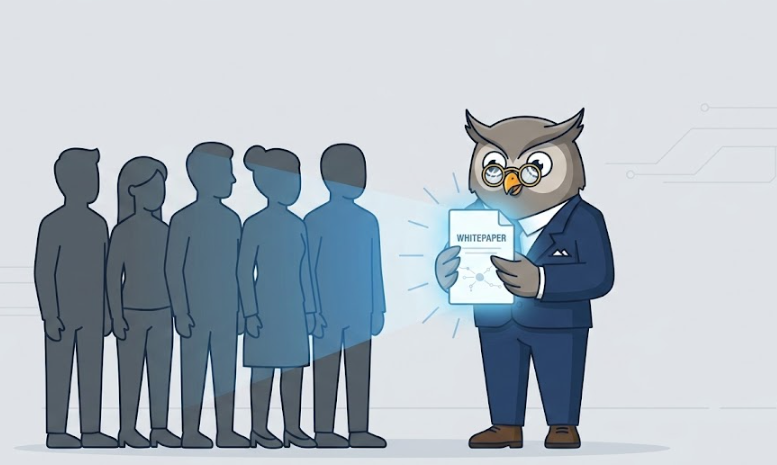
No amount of venture capital can force a skeptical engineer to approve your product.
Imagine you just pitched your cybersecurity startup to a Fortune 500 CISO. The meeting went perfectly. The CISO smiled, nodded, and praised your user interface. You leave the room convinced that a million-dollar contract is just a few administrative steps away.
You are entirely wrong. Your deal is about to enter a corporate black hole.
The CISO is not the sole decision-maker. Behind that executive stands a quiet, skeptical, and highly protective buying network. No matter how much venture capital you pour into aggressive sales representatives or polished marketing presentations, you cannot bypass this group. If you rely on hype instead of evidence, its members can stop the deal without ever meeting your sales team.
The Crowd in the Shadows
Modern enterprise purchasing is no longer a negotiation between two people. The title's 11-headed beast now understates the scale. Forrester's 2026 State of Business Buying research, based on a survey of nearly 18,000 global business buyers, found that the average buying decision involves 13 internal stakeholders and nine external participants. The network grows for more expensive or complex purchases.
This is not a monolithic group of business executives. It is a panel of specialists with different responsibilities:
- The lead engineer wants to know whether your architecture will break existing pipelines.
- The compliance officer evaluates whether your system introduces regulatory liabilities.
- The CFO demands credible financial justification before releasing budget.
The process is long because the group must establish requirements, compare options, manage risk, and reach internal agreement. In 6sense's 2025 global study of nearly 4,000 B2B buyers, the average buying cycle was 10.1 months.
The critical bottleneck for your sales team is that preference forms before most members speak with a vendor. The same 6sense study found that buyers first contacted sellers about 61% of the way through the journey. By that point, 94% of buying groups had already ordered their shortlist, and the winning vendor was on the Day One shortlist 95% of the time.
If your representatives cannot get in front of those evaluators early, your published evidence has to do the work.
Why Sales Decks Fail the Technical Review
When an internal champion shares your sales presentation with engineering, compliance, finance, or procurement, the evaluation can stall.
A slide deck filled with broad promises and marketing language such as "AI-powered proactive defense" means little to a principal systems engineer. It does not explain how the product works, what assumptions it makes, how it integrates, or what evidence supports the claims. To a technical evaluator, missing documentation is a risk signal.
The 2025 Edelman and LinkedIn B2B Thought Leadership Impact Report measured this gap directly. In its U.S. sample, 71% of hidden decision-makers and 73% of target decision-makers rated thought leadership as moderately or substantially more effective than conventional marketing or sales materials at demonstrating a vendor's potential value.
If the committee cannot find authoritative, peer-quality documentation such as a comprehensive whitepaper, threat model analysis, or verifiable architecture report, it has little reason to accept the risk. The sales process slows, the champion becomes less willing to spend internal credibility on the purchase, and the opportunity can disappear.
Empowering Your Champion with Verifiable Evidence
To win the committee's approval, you must arm your internal champion with objective documentation that can stand up to technical, compliance, financial, and procurement scrutiny.
This is where Research as a Service (RaaS) becomes an operational tool.
Instead of forcing core developers to pause product work to write documentation, our RaaS model provides a dedicated team of cybersecurity researchers, data scientists, and technical authors. We research and produce publication-grade whitepapers, technical threat intelligence, and architecture reports under your brand.
The goal is not to add more marketing. It is to give engineers and compliance teams the evidence they need to evaluate the product, challenge its assumptions, and defend an approval decision. That makes your offering easier to judge on proof instead of promises.
Stop letting unseen committees veto your deals. Build your technical authority today.
Our services: Academic research, custom whitepapers, threat intelligence reports, detailed technical content, and architecture validation reports.
Contact us: yedidel.louck@gmail.com
In Chapter 3, we will address the internal talent trap: why asking your core engineering team to write technical whitepapers can become a costly operational mistake.
Frequently asked questions
- How many people are involved in a typical B2B buying decision?
- Forrester's 2026 State of Business Buying research found an average of 13 internal stakeholders and nine external participants, with larger networks for more expensive or complex purchases.
- Why do sales decks fail with technical buying committees?
- Sales decks often emphasize promises while omitting architecture, assumptions, integration detail, risk analysis, and verifiable evidence. Engineers, compliance teams, finance leaders, and procurement professionals need documentation that lets them test the vendor's claims.
- How can a startup influence buyers before a sales conversation?
- A startup can publish credible whitepapers, threat model analyses, architecture reports, and original research that buyers can evaluate and share internally while they are forming requirements and ranking vendors.
- What is Research as a Service?
- Research as a Service provides external research and technical writing capacity so a company can produce evidence-based whitepapers, threat intelligence, and architecture reports without pulling its core engineering team away from product work.
Related on CyberBiz
- Chapter 1: The Great Startup Authority Crash — Why generic claims and high-volume outreach deepen the authority gap for cybersecurity startups.
- Cybersecurity market map — Explore the categories and vendors that enterprise security buyers evaluate.
Sources
- The State Of Business Buying, 2026 — Forrester
- The B2B Buyer Experience Report for 2025 — 6sense
- 2025 B2B Thought Leadership Impact Report — Edelman and LinkedIn
Topics
Professional Services & Consulting · Governance, Risk, and Compliance · AI Security, Governance and Assurance
Written by
Guest author.