Itron's Breach Is the OT Vendor Test the Industry Avoided
Itron disclosed a 13-day intrusion in an SEC 8-K. The breach happened to the OT vendor, not the utility. The industry has been pitching the wrong direction.
By Tal Eliyahu · · 9 min read
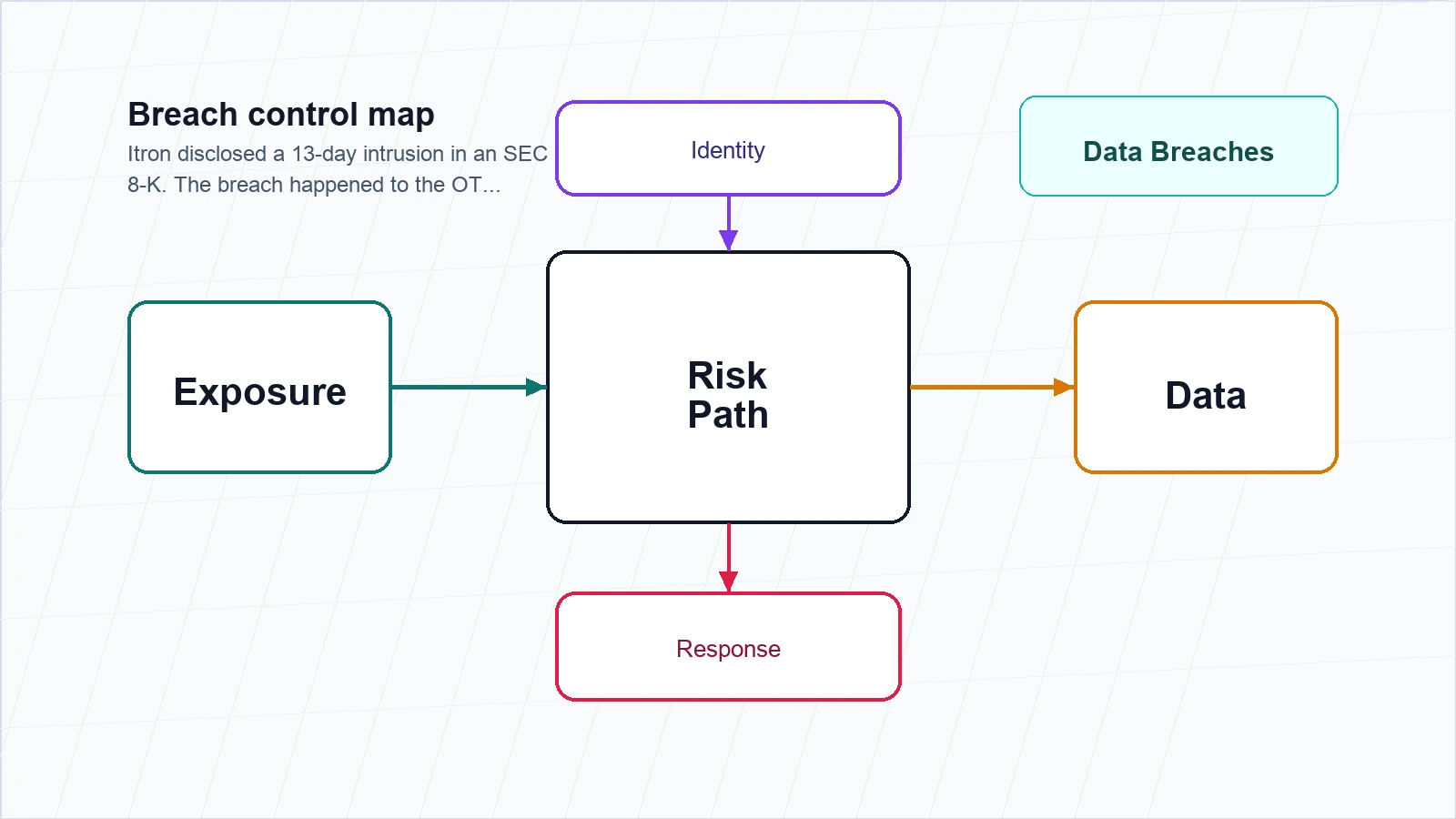
The cybersecurity industry has spent five years selling OT security downstream. Itron's breach is what happens when the threat moves upstream.
On April 26, 2026, Itron disclosed a cybersecurity incident in an SEC 8-K filing. The disclosure was specific. An unauthorized third party had access to internal Itron systems beginning on or before April 13. Discovery took roughly 13 days. A May 1 amendment confirmed the access reached certain customer-hosted systems. No ransomware group has claimed credit. Itron expects insurance to cover a significant portion of direct costs and stated it currently believes the incident is not material.
Itron is not a small vendor. The company is publicly traded on NASDAQ under ITRI with $2.4 billion in annual revenue. Its smart meters and grid-edge devices are deployed at roughly 7,700 utilities and 112 million endpoints across more than 100 countries — the technology that mediates how electricity, gas, and water flow to a meaningful share of the developed world.
Many people will read the 8-K as routine vendor risk: a public company gets compromised, files the form, insurance covers the loss, the market moves on. That read misses what the filing exposes. The OT security category has been sold for half a decade as protection for the utility. Itron's breach happened to the vendor that sits upstream of the utility — and that asymmetry is what makes this filing the most interesting OT security disclosure of the year.
OT security was sold downstream. The threat moved upstream.
The OT security category was built around a thesis. Industrial control systems are old, legacy networks are flat, ransomware groups had figured out that hospitals and pipelines pay. The pitch — from Claroty, Dragos, Nozomi Networks, Armis, and a dozen smaller vendors — was that utilities, manufacturers, oil and gas operators, and water authorities needed continuous visibility into their OT networks. Five years of category development followed. NERC CIP got teeth. The TSA published pipeline cybersecurity directives. Boards started asking about industrial cyber. The category grew.
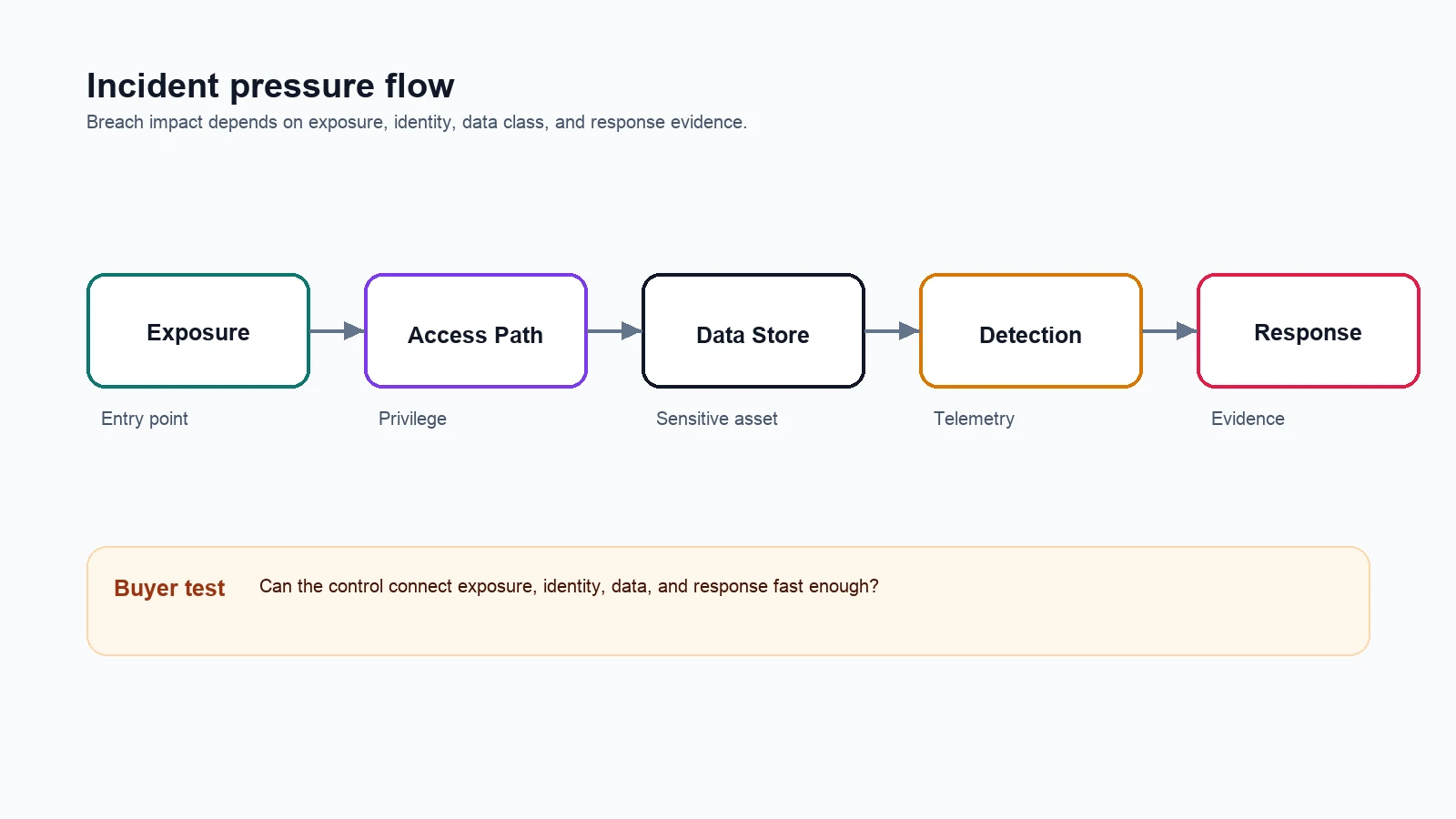
All of that work was pointed at one direction: protecting the operator. The utility's network. The manufacturer's plant floor. The pipeline's SCADA system. The vendors selling into this category framed OT security as a defense-in-depth problem at the customer site. Their dashboards showed the customer's environment. Their threat intelligence covered the customer's adversaries. Their incident response was for the customer's downtime.
Itron is what was upstream of all of that. The smart meter on a customer's wall is read, configured, and sometimes patched through systems Itron operates. The grid-edge device sending consumption data is part of an architecture Itron designed. The headend software at the utility ingesting that data was, in many deployments, bought from Itron. When attackers got into Itron's internal network for thirteen days, they were inside the supply line that everyone downstream had been told was the part they needed to defend against.
That is the inversion the 8-K exposes. The OT category sold protection for the utility. The breach happened above the utility, in a place the category was not architected to see.
The 8-K is the test case the regulatory regime has been waiting for
The 2023 SEC cybersecurity disclosure rule made one thing clear: public companies have to file an 8-K when a cybersecurity incident is material. What *material* means in practice is being negotiated incident by incident, in real time, in front of the market. Itron's 8-K is now part of that negotiation.
Two pieces of the filing are doing real work. The first is the explicit statement that the company expects insurance to cover a significant portion of direct costs. That language is not boilerplate. It is the cyber-insurance market underwriting Itron's view of the incident — the carrier has, at minimum, signaled it intends to pay. That signal is a structural input to how Itron's customers and competitors will read the breach.
The second is the *not material* framing. The 8-K explicitly states that Itron currently believes the incident is not material. Whether that holds up depends on what the customer-hosted systems disclosure ends up meaning — and on whether the 13-day dwell time produces follow-on disclosures in the next 10-Q. The market reaction so far has been a quiet ~10% drawdown. Not a panic. Not a non-event.
NERC CIP supply-chain controls have always treated vendor-side breaches as the regulatory blind spot. The standards focus on the asset owner — the utility — and what the utility is required to verify about its vendors. Itron's filing now sits in front of regulators with a question that has been theoretical for five years: when the vendor itself is breached, what is the asset owner actually required to do about it? Expect that question to move from theoretical to operational across the next NERC audit cycle.
What changes for utilities buying OT security
For utilities and the procurement teams that select OT security tooling, the breach has two practical implications.
The first is contractual. Vendor-side incident-response language in OT contracts has historically been thin — typically a notice obligation and a generic indemnity. After Itron, expect that language to extend toward operational requirements: explicit dwell-time disclosures, mandatory third-party forensic access, and notification timelines that do not wait for the vendor's lawyers to read the 8-K rule. The utilities most exposed to upstream vendor risk will lead. The rest will catch up at renewal.
The second is architectural. OT security tools that monitor only the asset owner's environment leave the upstream blind spot in place. The vendors most likely to benefit from Itron's breach are the ones that already monitor for anomalous behavior on the vendor-managed side of the perimeter — the smart meter that suddenly talks to a new endpoint, the headend system that gets a configuration push from a non-standard source. Continuous monitoring of the OT vendor's footprint inside the utility is a different product than continuous monitoring of the utility's plant floor. Procurement teams that conflated the two will need to separate them.
This is a tailwind for standalone OT pure-plays — the vendors that build for the utility but architect their telemetry to capture vendor-side anomalies as a first-class signal.
What changes for OT-security vendors
The vendor-category implications cut in two directions at once.
For the standalone OT pure-plays — Claroty, Dragos, Nozomi Networks, Armis — Itron's breach is the cleanest sales narrative they have had in years. Five years of pitching against the upstream blind spot just got a public-company test case with an SEC disclosure attached. Expect the next earnings cycle from these vendors to feature Itron-shaped customer conversations.
For the platform vendors with OT modules — Palo Alto Networks Prisma, CrowdStrike Falcon, Microsoft Defender for IoT — the read is more complicated. The platform pitch has been that buyers should consolidate IT and OT visibility inside a single security operations center. Itron's breach makes the case that the IT/OT seam is exactly where the upstream blind spot lives, which can either accelerate the consolidation argument or fragment it depending on how utilities respond to the incident.
The M&A read is the more interesting one. The standalone OT vendors have been long-rumored acquisition targets. A breach that visibly stresses the boundary between IT and OT security is precisely the kind of catalyst that converts platform M&A appetite into actual deals. The next twelve months are now more likely than not to see one or two of the standalone OT pure-plays acquired by a public security platform. The pricing of that deal will reveal whether the platforms are paying for the product or for the catalyst.
The insurance language is the most interesting part of the filing
Most readers of an 8-K skim the insurance language. They should not skim Itron's.
The cyber-insurance market has spent four years repricing risk around ransomware, supply-chain compromise, and now AI-driven attack tooling. Premiums have hardened. Sub-limits on extortion payments have tightened. Carrier appetite for OT-vendor risk specifically has been one of the most contested underwriting questions of the past two cycles.
Itron's explicit insurance-recovery language is therefore a forward signal. The carrier is, at minimum, willing to fund a public-company incident at a critical-infrastructure vendor without forcing a coverage dispute into the disclosure. That signal will travel. Expect cyber-insurance underwriting questionnaires for OT vendors to look meaningfully different in the next renewal cycle, with new questions about dwell-time controls, vendor-managed system monitoring, and customer-hosted environment access. The carriers that priced this incident's recovery are the carriers setting the terms for the rest of the category.
What to watch next
Three signals over the next two quarters will tell us whether Itron's breach becomes a category-shaping event or a contained incident.
The first is the materiality determination. Itron's *not material* framing held up at filing. Whether the 10-Q amends that view depends on what the customer-hosted systems disclosure resolves into — and on whether any utility customer files its own 8-K referencing Itron downstream impact. A single utility filing changes the materiality calculus across the supply chain.
The second is the regulatory response. NERC, the TSA, and the SEC each have a different lever to pull. Watch for guidance, advisories, or proposed rule changes that explicitly address vendor-side incidents. The first regulator to publish vendor-breach-specific language sets the template for the next decade of supply-chain controls.
The third is the M&A read on the standalone OT pure-plays. If a public security platform announces acquisition of Claroty, Dragos, or Nozomi in the next six months, the consolidation thesis wins. If the pure-plays raise instead — at premium valuations citing Itron-shaped customer pipelines — the standalone thesis wins. Either outcome is informative.
The blind spot has been visible to the OT security category for five years. Every vendor pitch deck mentioned vendor-side risk somewhere on slide six. Itron is the moment the slide stopped being theoretical.
Frequently asked questions
- What is the structural significance of the Itron breach?
- Itron is the OT vendor that sits upstream of the utility customer. For five years, the OT security category has been sold to utilities as protection for their networks — Claroty, Dragos, Nozomi Networks, and Armis built their pitch around the asset owner's environment. Itron's breach happened above the asset owner. That inversion exposes the upstream blind spot the category was not architected to see, and it forces a different question into procurement: what monitoring covers the vendor-managed side of the OT perimeter?
- Why does the SEC 8-K language matter beyond the disclosure itself?
- Two phrases in the 8-K are doing real work. The first is the explicit statement that insurance is expected to cover a significant portion of direct costs — the cyber-insurance market underwriting Itron's view of the incident. The second is the *currently believes not material* framing, which depends on whether the customer-hosted systems disclosure resolves into a downstream utility filing. Both phrases are forward signals: insurance for how OT-vendor risk gets priced in the next renewal cycle, materiality for how SEC disclosure rules apply to the rest of the supply chain.
- What does Itron's breach mean for OT-security vendors like Claroty, Dragos, and Nozomi Networks?
- It is the cleanest sales narrative the standalone OT pure-plays have had in years. The category has been pitching against the upstream blind spot for half a decade, and Itron's breach now provides a public-company test case to anchor that pitch in. Expect the next earnings cycle to feature Itron-shaped customer conversations. The more interesting downstream effect is M&A: a breach that visibly stresses the IT/OT boundary is exactly the kind of catalyst that converts platform-vendor acquisition appetite into actual deals.
- What should utilities reading the Itron disclosure do next?
- Two practical moves. First, revisit OT-vendor contracts: dwell-time disclosure obligations, third-party forensic access, and notification timelines that do not wait for vendor lawyers should be in scope at the next renewal. Second, audit which OT-security tooling actually covers the vendor-managed side of the perimeter versus only the asset-owner's plant floor. Tools that monitor only what is downstream of the vendor leave the upstream blind spot in place. Continuous monitoring of vendor-managed devices and configuration changes is a different product than continuous monitoring of the utility's network.
Related on CyberBiz
- Cybersecurity market map — Where OT security and critical-infrastructure vendors sit within the broader cybersecurity vendor landscape.
- Public cybersecurity companies — Track which public security platforms are most likely to acquire in the OT security category over the next twelve months.
- Palo Alto Networks stock profile — Public coverage of Palo Alto Networks, including Prisma's IT/OT consolidation thesis.
- Palo Alto's Portkey acquisition analysis — Companion piece on platform-vendor M&A in adjacent cybersecurity layers.
- Newsroom — Live cybersecurity market feed: breaches, M&A, funding rounds, and product launches.
Sources
- Itron 8-K original disclosure (April 24-26, 2026) — StockTitan / SEC EDGAR
- Itron 8-K/A amendment (May 1, customer-hosted systems language) — StockTitan / SEC EDGAR
- Critical infrastructure giant Itron says it was hacked — TechCrunch
- American utility firm Itron discloses breach of internal IT network — BleepingComputer
- Major critical infrastructure supplier reports cyberattack — Cybersecurity Dive
Topics
Industrial Control Systems · Third-Party Risk Management · Governance, Risk, and Compliance · Incident Detection and Response
Written by
Tal Eliyahu
Editor at CyberBiz, covering cybersecurity vendors, M&A, and platform shifts.