Dragos Phosphorus Deal Moves OT from Visibility to Control
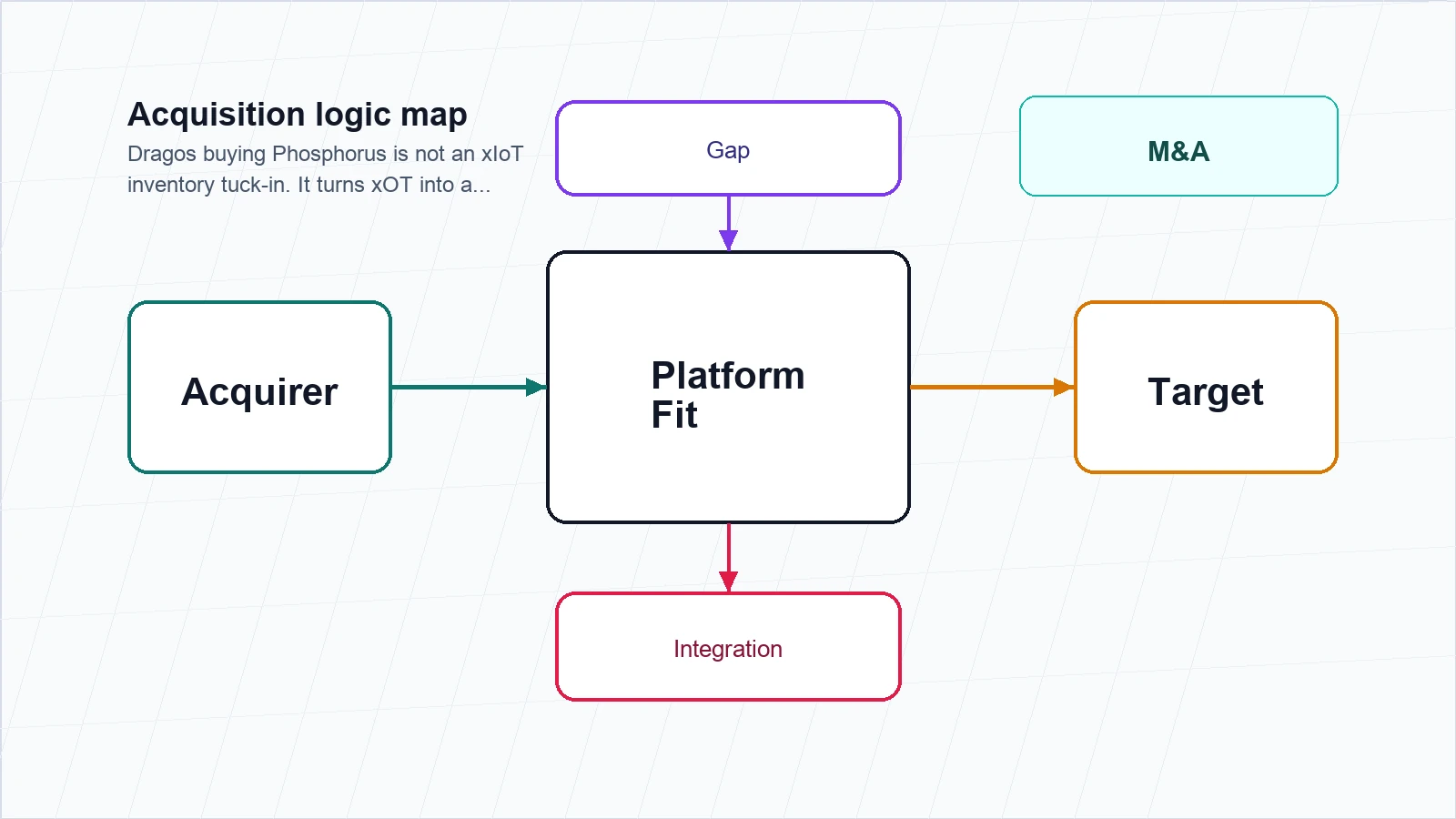
Dragos buying Phosphorus is not an xIoT inventory tuck-in. It turns xOT into a control-plane claim for every device that can affect operations.
By Tal Eliyahu · · 8 min read
The fence moved.
Not the market map. Not the slideware category boundary. The actual operational fence.
Dragos acquiring Phosphorus is easy to read as a normal OT-security tuck-in — Dragos gets more device visibility, Phosphorus gets OT credibility, customers get a broader platform. Fine. That is the clean version.
I see it differently. This is a boundary claim — and a useful one. Dragos is saying the OT security perimeter no longer ends at the network, the PLC, or the industrial control system. It extends to every connected device that can influence operations.
That is a much bigger move.
Dragos is buying the device layer
Dragos announced the Phosphorus acquisition on June 1, 2026, framing the deal around xOT, or extended operational technology. The company said Phosphorus extends the Dragos Platform across connected devices embedded in critical infrastructure, manufacturing, energy, water, transportation, and data centers.
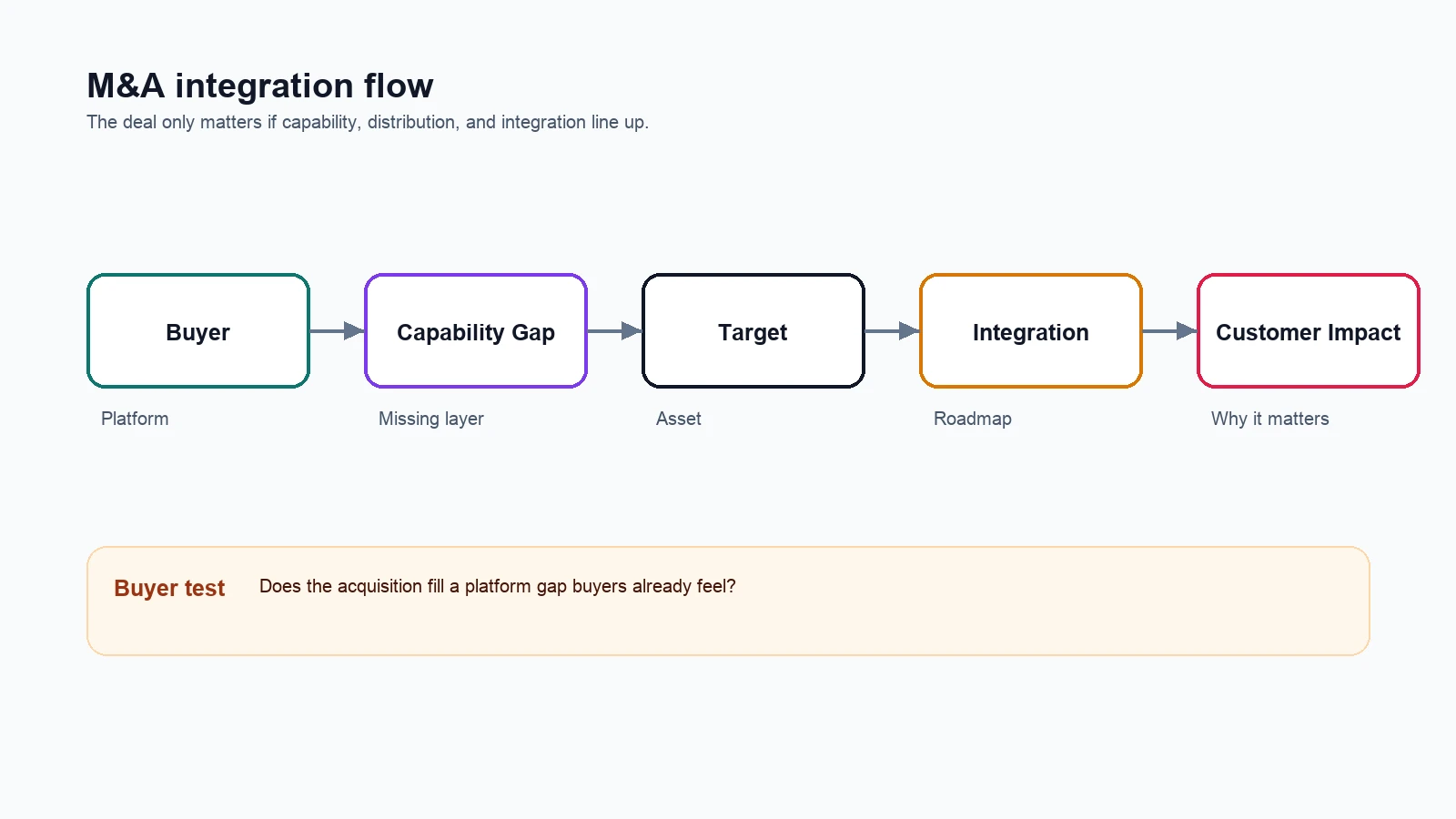
The deal terms were not disclosed. SecurityWeek reported that Phosphorus had raised roughly $65 million and that customers should expect expanded asset visibility and device intelligence first, with automated remediation and a unified platform experience later.
The product shape matters. Phosphorus is not only another passive visibility tool — its platform focuses on connected-device discovery, exposure assessment, and remediation workflows across large device fleets. Dragos highlighted password rotation, firmware updates, certificate management, and configuration hardening as the work Phosphorus can automate.
That is the point.
Visibility was the first OT-security category. Control is the next one.
Dragos has been building toward this for a while. Its October 2024 acquisition of Network Perception added OT network topology, segmentation validation, and firewall-rule analysis. That deal mapped the paths. The Phosphorus deal secures the things moving on those paths. Network Perception tells you what can talk to what. Phosphorus helps decide whether the device should be trusted, hardened, patched, or reconfigured.
This is not additive in the spreadsheet sense. It is additive in the architectural sense. The platform is moving from a map of the operational environment to a control plane for the operational environment.
xOT is a fence line, not a label
The phrase xOT sounds like category marketing until you read what Dragos is doing with it.
Dragos published a companion piece defining extended operational technology as the full operational environment: any system, regardless of type, owner, or protocol, that can influence a physical process or control loop. That definition is doing work — it moves the classification test from what the device is to what the device can affect.
A printer is not usually OT. A printer that stops a production line when labels do not print is suddenly part of the operational system. A Windows box is not usually ICS. A Windows HMI that controls a physical process is not just another IT endpoint. The context changes the category — and the fence.
This is the fence line — not a metaphor, a purchasing boundary.
Traditional OT security drew the fence around industrial protocols, control systems, and plant-floor networks. xIoT vendors drew it around connected devices. Dragos is trying to draw it around operational consequence. If the system can influence the physical process, it belongs inside the security program.
That is a cleaner buyer argument than xIoT. It is also a more dangerous one for the market.
If the buyer accepts the xOT frame, many adjacent tools become incomplete by definition. IT asset inventory is incomplete because it misses operational context. OT network monitoring is incomplete because it misses device state and remediation. IoT security is incomplete because it treats device class as the category. The xOT frame says the only category that matters is the one that maps to operational consequence.
That is how categories get redrawn.
ServiceNow bought the exit. Dragos bought the missing layer.
The timing is awkward in the best way.
On April 20, 2026, ServiceNow completed its $7.75 billion acquisition of Armis, one of the clearest platform exits for cyber-physical asset visibility. We covered the broader 2026 M&A pattern in Cybersecurity M&A 2026: Platforms Draw the Map. A natural investor read after ServiceNow/Armis was that other OT and cyber-physical pure-plays could draw buyer interest.
Dragos just complicated that read.
Instead of waiting to be the next object on a platform buyer's shopping list, Dragos bought the layer that makes its own platform harder to reduce to OT visibility. That is the strategic signal. ServiceNow bought cyber-physical visibility and risk workflow. Dragos bought connected-device remediation and xOT control. One buyer annexed the category from the workflow side — the other is trying to expand the pure-play from inside the category.
Both moves can be right.
The ServiceNow/Armis deal says cyber-physical assets now matter to horizontal workflow platforms. Dragos/Phosphorus says OT-native platforms still have a path if they own the operational context deeply enough. The standalone bull case is not that Dragos remains a better dashboard. The bull case is that OT-native context plus device-level remediation becomes too specific for a horizontal platform to replicate quickly.
That is a real bull case. It is not a guaranteed one.
The Itron lesson arrived early
This also connects directly to the Itron breach analysis from May.
Itron was interesting because a corporate IT breach at a utility technology vendor forced the industry to look upstream, at the vendor layer adjacent to operational environments. The lesson was not simply vendor risk. It was that operational environments have dependencies outside the traditional plant-floor boundary. Smart meters, grid-edge devices, building automation, vendor-hosted systems, and device-management paths all sit near the control loop now.
Dragos is making the same argument from the product side.
Operational risk is no longer contained by the old OT network diagram. The systems that influence operations include connected devices that were historically treated as adjacent, unmanaged, too numerous, or too annoying to govern. That is why Phosphorus matters. It gives Dragos a way to talk about the device fleet as part of the operational environment, not as a separate IoT problem floating beside it.
Many buyers will see this as an inventory expansion. That is too small.
The sharper read is remediation expansion. If a device has default credentials, stale firmware, weak certificates, or insecure configuration, knowing it exists is only the first move. The economic value is in changing its state without breaking operations. That is where OT-native trust matters. Nobody wants a generic IT tool rotating credentials on fragile plant equipment because it found a policy violation.
The fence moved, but the blast radius stayed physical.
The bear case is integration tax
Every acquisition promises a unified platform. Few arrive on schedule.
The near-term plan is staged. Dragos said customers will get expanded asset visibility and device intelligence first, with automated remediation workflows and a unified platform experience to follow. Phosphorus told customers its team, technology, and support commitment remain intact while it joins Dragos. That is the right message, but it also tells us integration is not done yet.
This is the bear case — and it is real.
Device remediation is harder than device discovery. Firmware updates, credential rotation, certificate management, and configuration hardening all sound clean in a press release. In operational environments, each one touches uptime, safety, regulatory evidence, maintenance windows, and site-specific tribal knowledge. The product has to be powerful enough to change device state and careful enough not to create the incident it is trying to prevent.
Dragos has a credible path because OT trust is its core asset. The question is whether that trust transfers from monitoring and intelligence into automated action. Buyers may accept Dragos as the system that sees the plant. Accepting it as the system that changes the plant is a different threshold.
That threshold is the whole game.
The next OT deal will be judged against control
The Phosphorus acquisition changes how the next OT-security deal gets evaluated.
Before this, the easy M&A checklist was visibility, threat intelligence, asset context, and industry credibility. Those still matter. But Dragos just added a new line item: device-level control. The next acquisition in OT or cyber-physical security will have to answer whether it expands the buyer's ability to see the environment, govern the environment, or change the environment.
Seeing is table stakes — control is where the category moves next.
This matters for Claroty, Nozomi Networks, and the rest of the cyber-physical cohort. It also matters for the public platforms circling the category. A buyer looking at OT security after ServiceNow/Armis and Dragos/Phosphorus is not just buying an asset graph. The buyer is buying the right to define what counts as the operational environment.
That is why the word xOT matters. It is not only a new acronym. It is a land claim.
If Dragos makes the claim stick, the company owns a stronger strategic position than it had before the deal. It is no longer only the pure-play OT platform with threat intelligence and network visibility. It becomes the company arguing that the operational environment includes every device, every path, and every context that can affect the control loop.
The fence moved. Now everyone else has to decide which side they are on.
Frequently asked questions
- What happened in the Dragos Phosphorus acquisition?
- Dragos acquired Phosphorus on June 1, 2026 to extend the Dragos Platform across connected devices in what it calls xOT, or extended operational technology. Phosphorus brings device discovery, exposure assessment, and remediation workflows for large connected-device fleets. The companies did not disclose financial terms.
- What is xOT in OT security?
- xOT means extended operational technology. Dragos defines it as the full operational environment: any system that can influence a physical process or control loop, regardless of whether the device looks like classic OT, IT, IoT, or something in between. The key test is operational consequence, not device category.
- Why does the Dragos Phosphorus acquisition matter for buyers?
- The deal pushes OT security beyond asset visibility. Buyers have spent years asking vendors to show what is inside the plant or critical-infrastructure environment. Dragos is now arguing the next layer is device-level control: credentials, firmware, certificates, configuration, and remediation workflows that change device state without breaking operations.
- How does Dragos Phosphorus fit the ServiceNow Armis deal?
- ServiceNow buying Armis proved cyber-physical asset visibility is strategic to horizontal workflow platforms. Dragos buying Phosphorus is the OT-native answer: instead of waiting to be bought, Dragos is expanding its own platform toward connected-device remediation and xOT control. The two deals define opposite sides of the same cyber-physical consolidation cycle.
- What should investors watch after this OT security deal?
- Watch whether the next OT or cyber-physical deal is framed around visibility, workflow, or control. Visibility alone is becoming table stakes. The stronger M&A signal is whether a buyer gains the ability to govern or change the state of operational devices at scale.
Related on CyberBiz
- Cybersecurity market map — Where OT, ICS, and cyber-physical security vendors sit in the broader cybersecurity market.
- Cybersecurity M&A 2026: platforms draw the map — Companion analysis on how 2026 platform deals are redrawing cybersecurity categories.
- Itron breach analysis — Why vendor-side OT risk exposed an upstream blind spot in the critical-infrastructure security model.
- Palo Alto Networks stock profile — A public cybersecurity platform example for tracking adjacent M&A pressure and platform strategy.
- Newsroom — Live feed of cybersecurity funding, M&A, breaches, and product launches.
Sources
- Dragos Acquires Phosphorus to Bring OT-Native Cybersecurity to the Full xOT Environment — Dragos
- Phosphorus Joins Dragos to Advance Device-to-Network xOT Security — Phosphorus
- Defining xOT: What Is Extended Operational Technology? — Dragos
- Dragos Acquires xIoT Security Firm Phosphorus — SecurityWeek
- Dragos Acquires Network Perception, Delivers OT Visibility — Dragos
- ServiceNow completes Armis acquisition — ServiceNow
Topics
Industrial Control Systems · Monitoring and Operations · Orchestration and Automation · Vulnerability Management
Written by
Tal Eliyahu
Editor at CyberBiz, covering cybersecurity vendors, M&A, and platform shifts.