Sysdig's Headless Bet Is About Positioning, Not Product
Sysdig declared cloud security headless on May 6, with MCP servers replacing the dashboard. The product is real. The positioning bet is bigger.
By Tal Eliyahu · · 10 min read
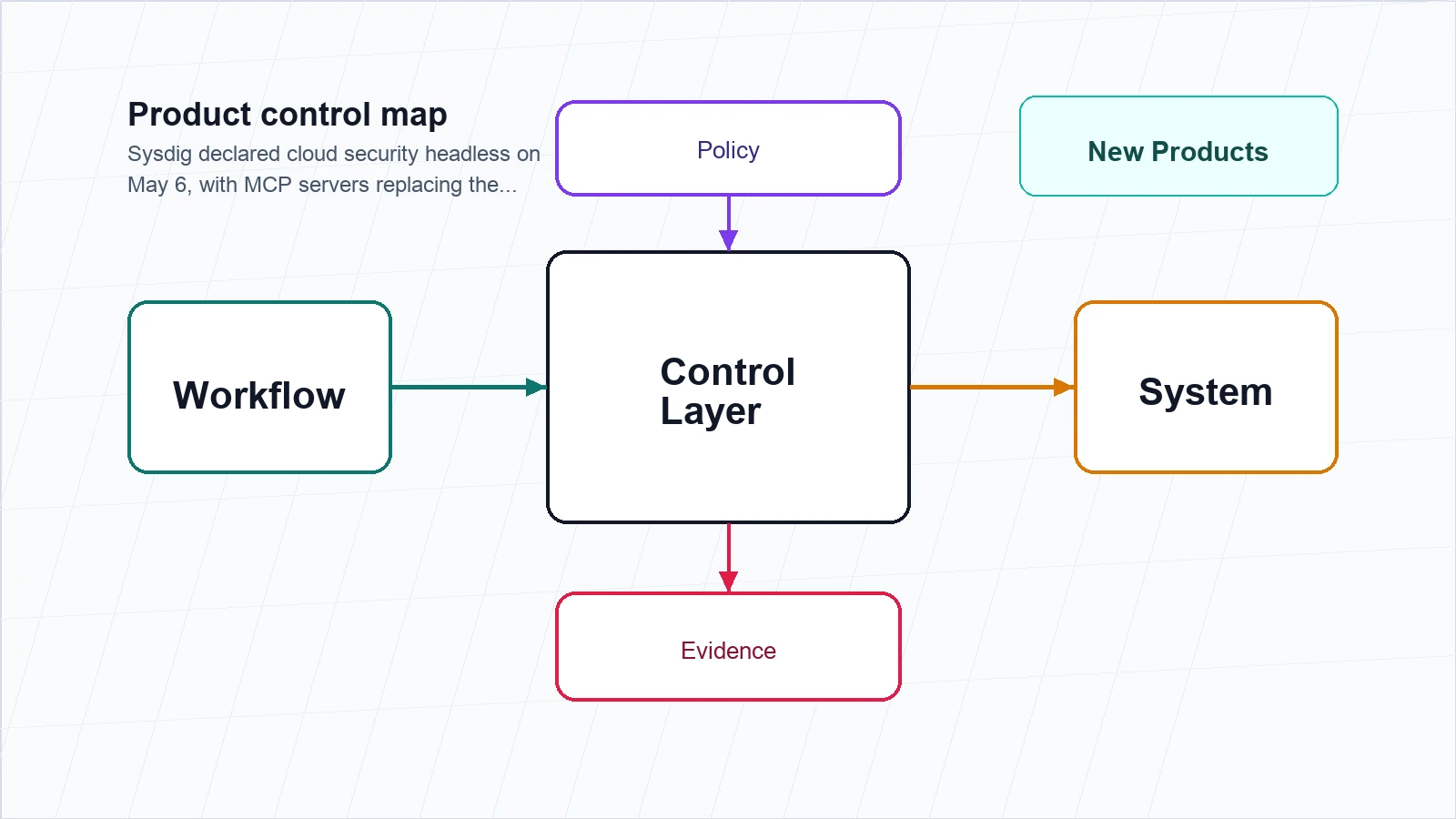
Every other cloud security vendor in 2026 spent the spring shipping prettier dashboards. Wiz refined its graph view. Aqua refreshed its risk explorer. Prisma Cloud added an AI assistant to its console. Orca tightened its remediation flow. The big platform companies have spent eight quarters competing on who can render a Kubernetes attack path most clearly.
Sysdig spent the spring deciding the dashboard is the legacy interface.
On May 6, 2026, Sysdig announced what it calls headless cloud security — the first major CNAPP launch positioned around the absence of a UI. The press release does not announce a feature. It announces a thesis: the primary consumer of cloud security in 2027 is not a SOC analyst. It is an AI agent operating on the analyst's behalf, and Sysdig is rebuilding its product around that consumer.
The thesis is correct. The product is real. The bet, however, is not really about the product.
What Sysdig actually shipped
Five things changed on May 6.
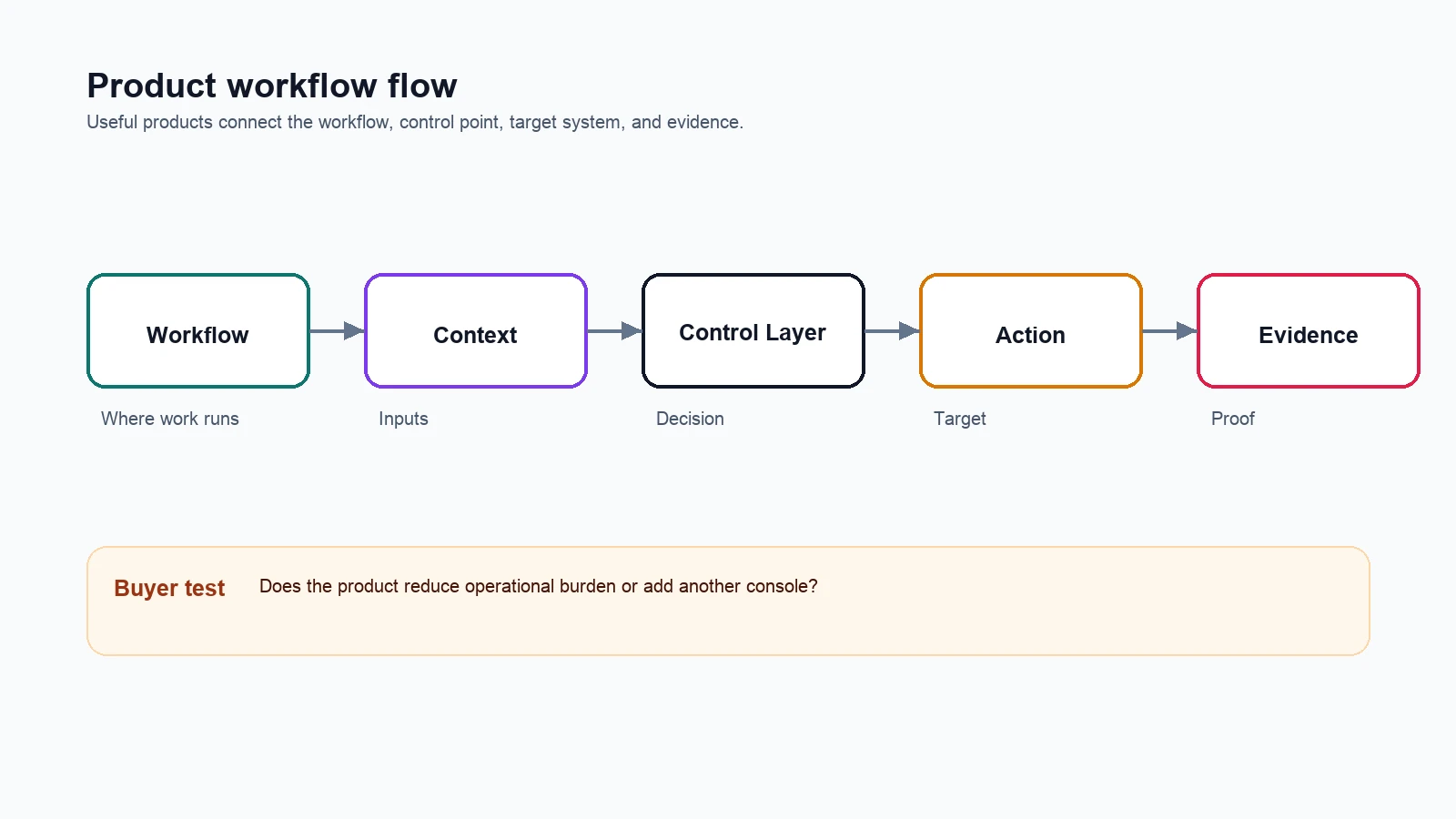
First, the consumption model. Sysdig now exposes its full CNAPP surface — vulnerability management, posture management, runtime threat investigation, onboarding — through MCP servers, CLIs, plug-ins, and APIs, designed to be called by coding agents like Claude Code, Codex, and Cursor rather than navigated by humans. The dashboard is still there. It is no longer the centerpiece.
Second, the workflow primitives. Four named flows now ship as MCP servers: vulnerability triage with auto-remediation (the agent opens Jira tickets and PRs), posture management expressed in natural-language policy (the agent translates intent into enforceable controls), runtime threat investigation (the agent correlates Falco events with vuln data and threat intel), and onboarding automation (the agent generates configuration and validates prerequisites with approval gates).
Third, the runtime layer underneath. The headless surface sits on top of Falco — Sysdig's open-source runtime detection engine, a CNCF graduated project. The architectural play is to use Falco's deep runtime telemetry as the data substrate the agent reasons against, then expose that reasoning through MCP. The runtime detection layer is not new. The decision to make it agent-addressable through an open protocol is.
Fourth, the executive framing. Loris Degioanni, Sysdig's founder and CTO, gave the line that anchors the launch: "Security teams don't need more dashboards, they need better outcomes. With headless cloud security, we're rewriting security without the UI." That sentence is not a product description. It is a flag planted on territory.
Fifth, what did not change. The Sysdig UI is not deprecated. The press release explicitly states the UI "remains the right interface for teams who prefer it." Sysdig Secure and Sysdig Monitor remain active SKUs. No customer is being forced into an agentic workflow. The launch is additive, not destructive.
That last detail is the one most coverage missed. The product is conventional. The brand bet around it is the news.
The headless claim is positioning, not product
Sysdig is not the first cloud security vendor to expose MCP servers. Every major CNAPP and CSPM has been quietly building agent integrations for months. The question every product manager at Wiz, Orca, Aqua, and Prisma Cloud has been answering since late 2025 is the same: how do we make our data callable from inside the agentic loop developers are already running?
Sysdig is the first to rebrand around the admission.
That is the structural move. The press release is not a product debut. It is a brand reservation on the headless adjective — the same way Wiz reserved agentless in 2020, SentinelOne reserved autonomous in 2018, CrowdStrike reserved AI-native in 2023, Cloudflare reserved zero-trust in 2021. The positioning advantage compounds: whoever owns the category-defining adjective by the time analyst firms write their next year's reports gets cited as the default. Defaults win procurement loops. Procurement loops win revenue. Revenue wins IPO multiples.
The Sysdig headless announcement is, structurally, a 2028 IPO play disguised as a Q2 product launch. The product backs the position. The position is what is actually being purchased.
Why positioning bets win cybersecurity
This is the part the news cycle will under-cover.
Cybersecurity is a category where buyers have to choose between fifteen vendors with overlapping capabilities, and the deciding signal is rarely a feature comparison. It is which vendor controls the adjective that defines the category in the next Gartner Magic Quadrant. The buyer's procurement template inherits the analyst firm's category language. The analyst firm's category language inherits the vendor that planted the flag first.
Wiz did this with cloud security in 2020. Before Wiz, "cloud security" was an Orca-and-Prisma-and-Lacework conversation. After Wiz, "agentless cloud security" was a Wiz conversation, and every competitor spent two years describing themselves as "also agentless." Wiz did not invent agentless scanning. They invented owning the word. The category followed.
SentinelOne did this with autonomous EDR in 2018. CrowdStrike did this with AI-native security in 2023. Cloudflare did this with zero-trust SASE in 2021. The pattern repeats because the category economics reward it. A 12-to-18-month lead on positioning translates to a 3-to-5-year lead in procurement defaults. The IPO multiple at the end of the cycle reflects who owns the adjective, not who shipped the best dashboard.
Sysdig is making the bet that headless is the next agentless. If they are right, every CNAPP press release for the next 18 months has to mention headless. Every Gartner CNAPP rubric for 2027 has a row for it. Every customer RFP has a line item asking for it. Sysdig pre-fills the answer.
The dual-buyer problem
Here is the deeper shift the headless launch makes visible.
Every cybersecurity product currently in market was designed for a single buyer: a human in a chair, looking at a dashboard, making decisions. Cybersecurity UX, cybersecurity onboarding, cybersecurity documentation, cybersecurity API design, and cybersecurity pricing have all been optimized for that user for fifteen years. The default workflow assumed the human had time to read the dashboard, narrow the alert list, click into the artifact, and act.
That assumption is collapsing on contact with agents.
When a developer using Claude Code asks "is the new container I'm shipping safe to deploy?", the agent that answers does not look at the dashboard. It calls the API. It needs the answer in a structured response the agent can pass to the next tool in its loop. The UI a human would use is now overhead the agent works around. Worse, vendors whose API surface is incomplete, badly documented, or rate-limited get bypassed entirely. The agent picks a different vendor whose surface is agent-ready.
So every cybersecurity product now has two distinct buyers: the human, who still signs the contract, and the agent, who picks the integration. Vendors that design only for one of these buyers lose half their procurement flow to whoever designs for both. Sysdig is the first major CNAPP vendor to publicly acknowledge this and commit a roadmap to the dual buyer. The acknowledgment is the news. The four MCP servers are an existence proof.
The structural implication is broader than CNAPP. Every SIEM vendor faces the same dual-buyer choice. Every EDR vendor. Every IAM, GRC, DLP, vuln management, and email security vendor. The dashboard era of cybersecurity products lasted from roughly 2009 to roughly 2026. Sysdig's May 6 launch is the cleanest public marker we have for when it ended.
What this means for the rest of the CNAPP field
Three things happen now in the cloud-native protection category, in order.
Wiz, Orca, Aqua, and Prisma Cloud each have to ship a headless story within ninety days. Not the underlying MCP integrations — those will be quiet and steady. The story. The brand language. The press release that mirrors Sysdig's framing without using the same adjective. Expect "agent-native," "developer-resident," "embedded," "ambient" — any word that lays claim to the same territory without conceding the noun to Sysdig.
Second, the smaller CNAPP and CSPM vendors who cannot afford a brand reset get pulled toward acquisition. The headless gap will be the explicit rationale in the next wave of cloud-security M&A, the same way agentless was the explicit rationale in the Lacework collapse. Read this together with the 2026 M&A landscape. Watch for the first acquisition where the post-deal press release names "headless" or "agent-native" as the strategic gap that motivated the buy. That sentence will appear inside twelve months.
Third, the public platform vendors — Palo Alto Networks, CrowdStrike, SentinelOne — start to feel the pull from the developer-tools side of the budget. CNAPP is one input to Prisma Cloud, Falcon, and Singularity Cloud. None of those products are designed for the dual buyer at the level Sysdig now is. The big platforms can absorb the gap through acquisition or through their own headless story. They cannot ignore it. The agentic security stack pillar we mapped a month ago now has a new layer to add: developer-resident security tooling exposed via MCP. Sysdig just claimed Layer 1.
What this means for vendors outside CNAPP
The pattern generalizes. Read the Sysdig launch as the leading indicator for adjacent categories.
The first SIEM vendor to ship a credible headless SIEM gets the adjective for the SOC era. The first identity vendor to ship a headless IAM gets it for the workforce-identity era. The first vuln vendor to ship a headless vuln-management product gets it for the developer era. There are eight or nine open categories in cybersecurity right now waiting for the same brand-reservation move Sysdig just made for CNAPP.
The first credible headless announcement in any of those categories before September 2026 has the same compounding advantage Sysdig now has. The second-mover has to argue against the adjective rather than for it. The argument from second position is structurally harder.
For investors tracking the 2026 funding signal map, this is the kind of move that retroactively explains valuations. Companies that have been pitching MCP integrations to series-A investors in early 2026 just got a public-market signal that their thesis is no longer fringe. Round sizes in agent-native cybersecurity should reset upward over the next two quarters.
For the public platforms tracked on our stock list, this is the kind of move that surfaces in earnings calls within two quarters. Analyst questions will start with "how is your platform positioned for the agentic-buyer transition?" The vendor that has a clean answer outperforms.
The renaming is the strategy
Sysdig did not kill the dashboard. The dashboard is still there. Sysdig declared the dashboard a legacy interface, and in the cybersecurity market, declaring a thing legacy is most of the work. The category follows the noun.
The product is real. It is not, strictly, headless — the UI ships, the existing customers see what they have always seen. The brand bet is the move that matters. Whoever owns the adjective owns the category. Whoever owns the category owns the procurement default. The procurement default is the entire game.
The dashboard era of cybersecurity products ended on May 6. The vendors who admit it first win the next decade.
Frequently asked questions
- What is Sysdig Headless Cloud Security and what does 'headless' actually mean?
- Headless Cloud Security is a May 6, 2026 launch from Sysdig that exposes the company's full CNAPP (cloud-native application protection platform) capability through Model Context Protocol (MCP) servers, CLIs, plug-ins, and APIs designed to be called by AI coding agents — primarily Claude Code, OpenAI Codex, and Cursor — rather than navigated through a human dashboard. The 'headless' framing refers to the absence of a required UI workflow, not the absence of a UI. Sysdig's existing dashboard products remain available; the launch adds an agent-addressable surface alongside them. The structural claim is that the primary consumer of cloud security in 2027 is an AI agent acting on the analyst's behalf, not the analyst directly.
- Did Sysdig discontinue its dashboard?
- No. This is the detail most coverage misses. The Sysdig press release and accompanying blog post explicitly state that the existing UI 'remains the right interface for teams who prefer it' and that the headless surface is for organizations that have already moved past the UI as their primary control surface. Sysdig Secure and Sysdig Monitor remain active SKUs. The launch is additive. What changed is brand positioning — Sysdig is the first major CNAPP vendor to publicly declare the dashboard a legacy interface, even though it still ships and is still supported.
- How does the MCP integration with Claude Code, Codex, and Cursor work in practice?
- Four named Sysdig workflows are now packaged as MCP servers: vulnerability triage with auto-remediation (the agent opens Jira tickets and pull requests against fixes), posture management with natural-language policy (the agent translates intent into enforceable controls), runtime threat investigation (the agent correlates Falco runtime events with vulnerability data and threat intelligence to map attack paths), and onboarding automation (the agent generates configuration, validates prerequisites, and deploys coverage with approval gates). A developer working inside Claude Code or Cursor invokes these flows by stating intent rather than calling raw APIs. The MCP server handles translation, the underlying Sysdig platform handles execution. As of launch, Sysdig has not published sample MCP payload structures or invocation examples publicly.
- What does this mean for competing CNAPP vendors like Wiz, Orca, Aqua, and Prisma Cloud?
- Three things happen now. First, each competing vendor has to ship a headless-equivalent story within roughly ninety days — not necessarily the underlying MCP integrations, but the brand language that lays claim to the same territory without conceding the noun to Sysdig. Expect 'agent-native,' 'developer-resident,' 'embedded,' and 'ambient' to appear as competing adjectives in CNAPP press releases this summer. Second, the smaller CNAPP and CSPM vendors who cannot afford a brand reset get pulled toward acquisition; the 'headless gap' will be the explicit rationale in the next wave of cloud-security M&A. Third, the public platform players — Palo Alto Networks, CrowdStrike, SentinelOne — will need to address the dual-buyer transition in their own Prisma Cloud, Falcon Cloud, and Singularity Cloud roadmaps. None of those products are designed for the agent buyer at the level Sysdig now claims to be.
Related on CyberBiz
- The agentic security category map — Where the headless / MCP-resident layer sits in the six-layer agentic stack. Sysdig just claimed a new node on the map.
- Palo Alto's Portkey AI gateway deal — Companion read: Portkey was about the inbound AI traffic plane (agents talking to LLMs). Sysdig is the outbound plane (agents talking to security products).
- Cybersecurity M&A 2026: platforms drawing the map — The pillar to track for the inevitable 'headless gap' acquisitions in CNAPP over the next twelve months.
- Cybersecurity funding signals framework — How positioning bets like 'headless' translate into series-A pricing and IPO multiples one cycle later.
- Public cybersecurity companies — Watch for PANW, CRWD, and S earnings-call questions about dual-buyer positioning over the next two quarters.
Sources
- Sysdig Introduces the Industry's First Headless Cloud Security Platform Built for AI Agents — Sysdig (press release)
- Introducing headless cloud security: Run Sysdig inside your AI coding agents — Sysdig (engineering blog)
- Sysdig delivers cloud security that runs inside AI coding agents — Help Net Security
- Sysdig has a head for headless agent-aligned cloud security — ComputerWeekly
- Sysdig moves cloud security into AI coding agents — TechInformed
- Sysdig Launches Headless Cloud Security Platform Designed for AI Agents — Security Boulevard
Topics
Application Security · Orchestration and Automation · Monitoring and Operations · AI Security, Governance and Assurance
Written by
Tal Eliyahu
Editor at CyberBiz, covering cybersecurity vendors, M&A, and platform shifts.